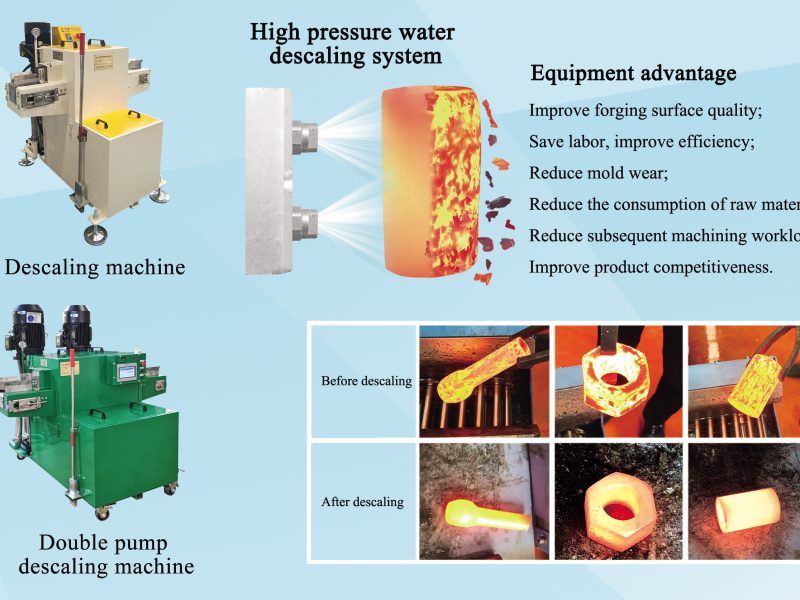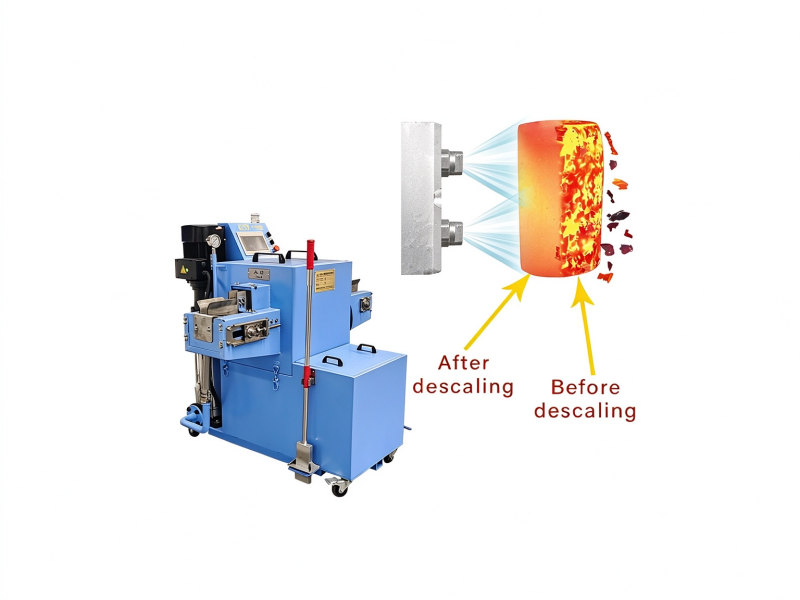
During hot forging, steel billets and other metal workpieces are heated to high temperatures before being shaped by forging equipment. This heating process causes oxidation on the metal surface, forming a layer commonly known as mill scale or forging scale.
If the scale is not effectively removed before forging, it may affect the surface quality of the finished parts and potentially cause surface defects during the forming process.
A forging descaling machine is designed to remove this oxide scale before the workpiece enters the forging process.
A high-pressure water descaling machine can be installed after the heating furnace and before the forging equipment. By using high-pressure water jets, the machine helps remove scale from heated metal workpieces before they are forged.
This article explains how a high-pressure water forging descaling machine works, where it is used, and what to consider when selecting one for a hot forging production line.
1. What Is a Forging Descaling Machine?
A forging descaling machine is industrial equipment used to remove oxide scale from the surface of heated metal billets or workpieces during hot forging production.
When steel is heated in a furnace, oxidation occurs on its surface. The resulting scale needs to be removed at an appropriate stage before forging.
A high-pressure water descaling machine uses pressurized water jets to impact the surface of the heated workpiece, helping break up and remove the oxide scale.
In a typical hot forging production process, the descaling machine is positioned after the heating furnace and before the forging machine. This allows the heated workpiece to pass through the descaling section before entering the forming process.

2. Why Is Descaling Important in Hot Forging?
Removing oxide scale before forging can help improve production quality and process stability.
Improve Workpiece Surface Quality
Oxide scale remaining on the workpiece may become pressed into the metal surface during forging, potentially creating surface defects. Effective descaling helps reduce this risk.
Reduce Scale-Related Problems During Forging
Scale can affect the contact conditions between the workpiece and the forging die. Removing loose or attached scale before forging helps provide a cleaner workpiece surface for the forming process.
Support Consistent Production Quality
For manufacturers producing different types of hot-forged components, controlling the condition of the workpiece surface before forging is an important part of maintaining consistent production quality.
Improve the Overall Forging Process
Installing a suitable descaling machine between the heating furnace and forging equipment helps integrate scale removal into the production process, rather than treating it as a separate manual operation.
3. How Does a High-Pressure Water Forging Descaling Machine Work?
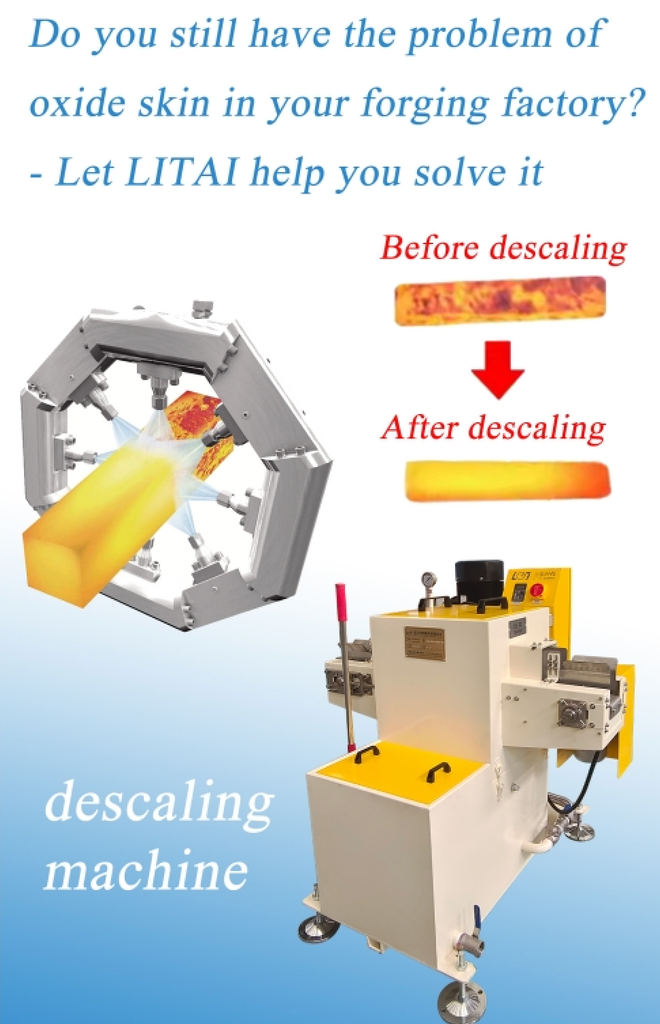
A high-pressure water forging descaling machine uses pressurized water jets to remove oxide scale from heated metal workpieces.
The machine is installed after the heating furnace and before the forging equipment. The workpiece moves through the descaling section while the spray nozzles remain fixed in position.
As the heated workpiece passes through the spray area, high-pressure water jets strike its surface and help remove the oxide scale.
The water system includes a circulation and filtration function, allowing water to be treated and reused within the system according to its operating design.
Typical Working Process
- Heating: Metal billets or workpieces are heated in the furnace to the required forging temperature.
- Transfer: The heated workpieces are transferred from the furnace toward the descaling machine.
- Water Descaling: The workpieces move through the descaling section while fixed spray nozzles direct high-pressure water jets onto their surfaces.
- Water Circulation and Filtration: The water system circulates and filters water according to the equipment design.
- Transfer to Forging: After descaling, the workpieces proceed to the forging equipment for the next production stage.
The actual descaling performance depends on factors such as water pressure, water flow, nozzle arrangement, workpiece temperature, material, dimensions, scale condition, and production speed.
The machine configuration should therefore be selected according to the actual workpiece specifications and production requirements.
4. Applications of Forging Descaling Machines
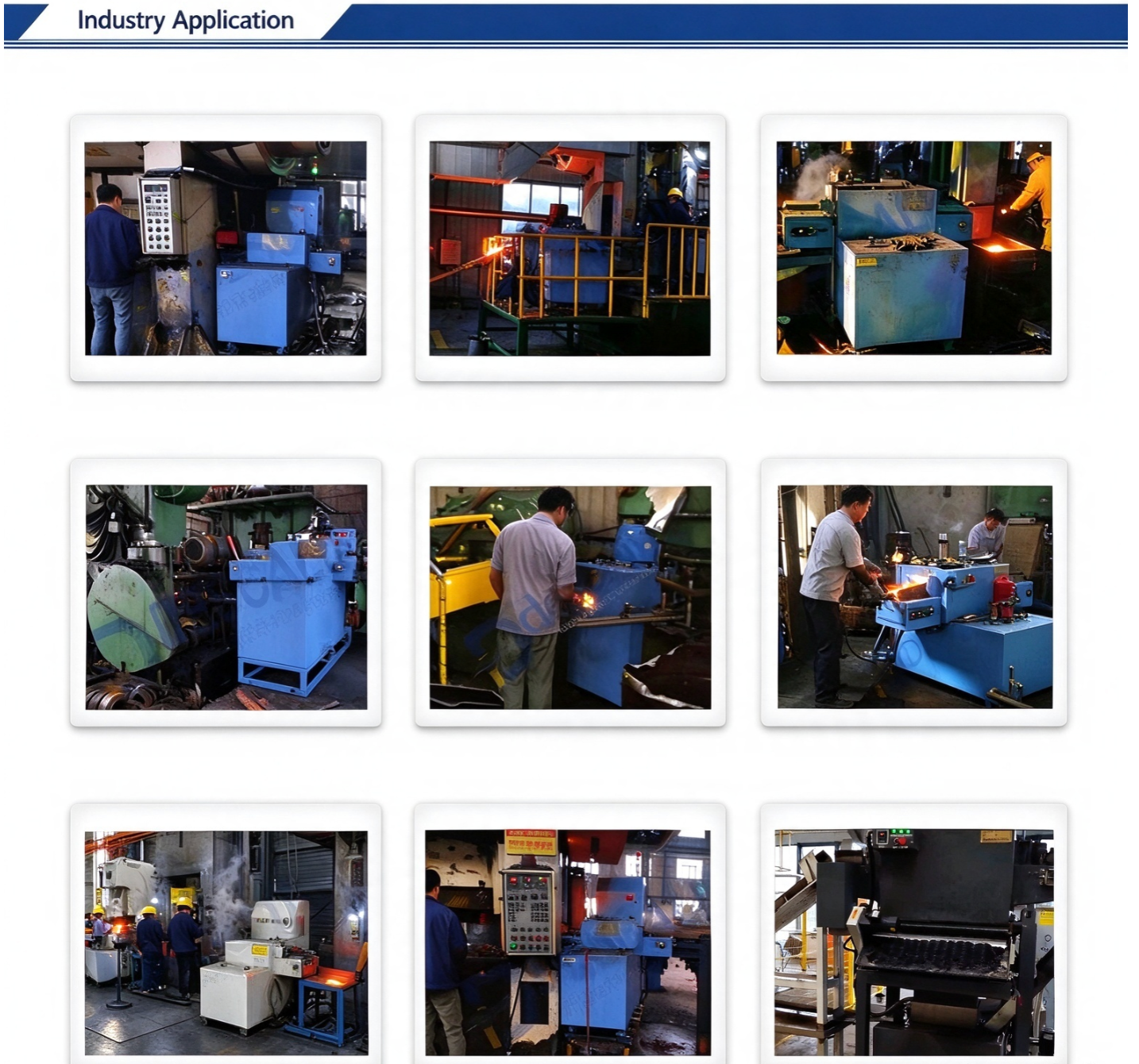
High-pressure water forging descaling machines are widely used in hot forging applications across different industries. Their purpose is to remove oxide scale from heated metal workpieces before forging, helping improve surface conditions and support a more consistent forging process.
Unlike equipment designed for a specific product, a forging descaling machine can serve a wide range of hot forging applications. Its suitability depends on the workpiece material, dimensions, heating conditions, production speed, and process requirements.
Hot Forging Production
During hot forging, metal workpieces are heated to high temperatures before being shaped by forging equipment. Oxide scale forms on the surface during heating and needs to be removed before the forging process.
A high-pressure water descaling machine can be installed between the heating furnace and forging equipment to remove surface scale before forming.
Different Types of Forged Components
Forging descaling machines can be used in the production of various forged components, including fasteners, automotive parts, machinery components, and other industrial metal products.
The application is not limited to a particular product category. Equipment selection should be based on the actual workpiece specifications and production process.
Customized Hot Forging Applications
For different hot forging production lines, the descaling machine can be evaluated according to the workpiece dimensions, material, heating temperature, production capacity, and line layout.
Providing workpiece samples, drawings, and production details helps determine a suitable equipment configuration for the specific application.
5. How to Choose the Right Forging Descaling Machine
Selecting a forging descaling machine requires more than checking the equipment itself. It is also important to evaluate how well the machine matches the existing production process.
(1)Workpiece Material and Dimensions
Different materials, diameters, lengths, and shapes may require different descaling configurations.
Before selecting equipment, manufacturers should provide detailed workpiece specifications and, where possible, sample drawings or photographs.
(2)Production Capacity
The descaling machine should match the production speed of the heating furnace and forging equipment.
An appropriate configuration helps maintain coordination between upstream heating, descaling, and downstream forging operations.
(3)Descaling Performance
The required descaling result depends on the workpiece surface condition and the quality requirements of the finished product.
Actual workpiece samples and before-and-after descaling comparisons are useful for evaluating equipment performance.
(4) High-Pressure Water System
Water pressure, water flow, and nozzle arrangement are important factors affecting descaling performance.
The water circulation and filtration system should also be considered when evaluating equipment operation and water management requirements.
(5)Production Line Integration
For manufacturers planning to install a descaling machine in an existing production line, it is important to consider the available installation space, workpiece transfer method, production speed, and coordination with the heating and forging equipment.
6. Can a Forging Descaling Machine Be Integrated into an Existing Production Line?
Yes. A forging descaling machine can be evaluated for integration into an existing hot forging production line.
The descaling section is positioned after the heating furnace and before the forging machine. Workpieces move through the descaling area while the spray nozzles remain fixed.
When planning an installation, manufacturers should consider:
- Heating furnace type and workpiece discharge method
- Workpiece material and dimensions
- Workpiece transfer and movement method
- Required production speed
- Available installation space
- Water supply, circulation, filtration, and drainage conditions
- Control and coordination requirements between production equipment
Providing the existing production line layout, workpiece specifications, and production requirements helps make equipment selection and integration planning more accurate.
7. Frequently Asked Questions
Q1: What does a forging descaling machine do?
A forging descaling machine removes oxide scale from heated metal workpieces before they enter the forging process. A high-pressure water descaling machine uses pressurized water jets to help remove surface scale.
Q2: Where is a forging descaling machine installed?
The machine is installed after the heating furnace and before the forging equipment, allowing scale to be removed before the workpiece enters the forging process.
Q3: How does a high-pressure water descaling machine remove scale?
The machine directs high-pressure water jets onto the surface of heated workpieces. The impact of the water helps break up and remove oxide scale.
Q4: What types of hot forging applications can use a forging descaling machine?
A forging descaling machine can be used in a wide range of hot forging applications across different industries. It is designed to remove oxide scale from heated metal workpieces before forging. Its suitability depends on the workpiece material, dimensions, heating conditions, and production requirements.
Q5: Does the descaling machine have a water circulation system?
The equipment includes a water circulation and filtration system. The specific system design and operating parameters should be confirmed according to the selected machine configuration.
Q6: What information is needed to select a suitable descaling machine?
Useful information includes workpiece material, dimensions, heating temperature, production capacity, existing production line layout, and required descaling results. Workpiece photographs or drawings are also helpful.
8. Contact Us for a Forging Descaling Solution
Looking for a high-pressure water descaling machine for your hot forging production line?
To help evaluate a suitable descaling solution, please share:
- Workpiece material and dimensions
- Heating method and workpiece temperature
- Required production capacity
- Existing production line layout
- Workpiece photographs or drawings
- Specific descaling requirements
Contact us to discuss your hot forging application and equipment requirements.